






Description
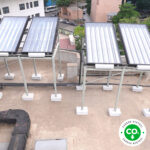
The HTS (Hybrid Thermal Solar) Panel transforms traditional HVAC systems by integrating solar-thermal energy into the refrigeration cycle. Compatible with high-efficiency air conditioners—with variable speed / multi-stage / inverter-based compressors—the HTS Panel functions as a compressor assistor, significantly reducing the compressor’s workload.
By harnessing the sun’s energy through parabolic mirrored concentrators, the panel energises (Increases heat and pressure both) the refrigerant after it exits the compressor. This reduces the need for mechanical compression in the next cycle, allowing the system to operate at lower RPMs, resulting in 25–40% energy savings, and up to 60% in optimal sunlight.
In addition to lowering power consumption, the system extends compressor life, reduces carbon emissions, and delivers consistent cooling performance. Compact, scalable, and eco-friendly, the HTS Panel is ideal for both industrial and commercial HVAC applications.
How It Works
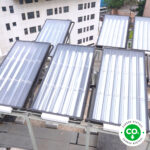
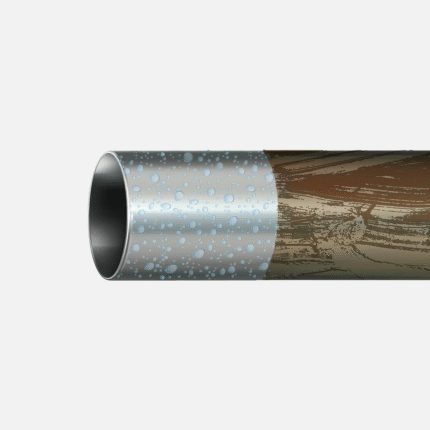
The HTS Panel uses parabolic mirrored concentrators to capture and focus sunlight onto a copper pipe coated with specialized solar-absorption paint. This heats the refrigerant gas after it exits the compressor, reducing the load on the compressor for the next cycle.
An intelligent sun-tracking system ensures maximum thermal capture throughout the day:
- Photo-sensors track the sun’s movement from east to west.
- Once the target temperature is reached, the system modulates reflector angles to maintain optimum heat without overheating.
- A built-in Rite-Temp™ system controls temperature and prevents stagnation.
This hybrid solar-assist method enhances overall HVAC efficiency while significantly reducing electricity bills.
Applications
- Commercial & industrial HVAC systems
- VRF and chillers of any brand
Additional Highlights
- 5-Year Warranty on manufacturing defects
- 12% GST and Accelerated Depreciation for commercial installations
No Painting Required, UV-stable finishes
Key Benefits

Significant Energy Savings
Reduces air conditioning power consumption by 25–40% on average annually.
High Space Efficiency
Occupying just 32 sq. ft., a single HTS Panel saves ~3,500 watts—over 10x more efficient than a typical PV panel in the same area.
Compact & Scalable
Each unit supports HVAC systems up to 7.5 tons / 10 HP / 90,000 BTU and is scalable for large installations.
Supported by Major Brands
Trusted by top manufacturers like Toshiba, Voltas, Blue Star, and LG.
Increased Compressor Lifespan
By operating under reduced load and RPM, the HVAC system enjoys a longer life.
Durability & Minimal Maintenance
Powder-coated aluminum body, hardened glass top, and robust design ensure long-term outdoor durability with low maintenance.
Sustainability Advantage
Lowers carbon footprint by reducing dependence on grid electricity, making it a green upgrade for any HVAC system.
Fast ROI
Pays back in ~36 months with a life expectancy of 15+ years.
Specification
- Panel Model: PSP32
- Size: 8 ft x 4 ft (32 sq. ft.)
- Weight: 86 kg
- Refrigerant Compatibility: Ideal for inverter-based systems (VRF, chillers, ductables, package units)
- Construction:
- Reflectors: Metalized aluminum foil
- Frame: Powder-coated 8011-H14 aluminum
- Absorbers: 5/8″ & 1-1/8″ copper pipes with high absorptivity coating (0.92 – 0.96)
- Cover: 4 mm hardened clear glass
- Insulation: 9 mm EPDM
- Tracking System: Dual photo-transistors, brushless stepper motor (12 VDC, 1.5 W)
- Power Consumption: <5 watts
Mounting: Adjustable stands with side-by-side scalability
CO₂ Capture & Conversion
CO₂ Capture & Conversion Technology
This advanced Carbon Capture and Utilization (CCU) technology, developed by Bharat Petroleum Corporation Ltd., provides an innovative solution for managing industrial CO₂ emissions. It uses a specialized solvent system to capture carbon dioxide and directly converts it into valuable chemicals through an integrated and efficient process.
Unlike conventional systems that involve multiple stages such as CO₂ separation, stripping, and compression, this technology operates through a single-step process, reducing energy consumption and operational complexity. The captured CO₂ is converted into Formic Acid using an advanced iridium-based catalyst with high selectivity (~97%), operating under mild conditions of around 50°C and 40 bar, making it a cost-effective, scalable, and sustainable solution for industrial applications.
Key Features
- Integrated One-Step Process – Combines CO₂ capture and conversion in a single system
- No CO₂ Stripping Required – Eliminates additional energy-intensive steps
- High Selectivity – Achieves ~97% conversion efficiency to Formic Acid
- Advanced Catalyst System – Uses iridium-based catalysts for effective performance
Operating Conditions
- Temperature: ~50°C
- Pressure: ~40 bar
- Designed to operate under mild and controlled conditions, ensuring safety and efficiency
Benefits
- Energy Efficient – Reduces energy consumption by removing multiple process stages
- Cost Effective – Lower operational and capital costs due to simplified design
- Scalable Technology – Suitable for industrial-scale applications
- Reduced Carbon Footprint – Helps industries minimize CO₂ emissions
Sustainability Impact
- Converts waste CO₂ into value-added chemical (Formic Acid)
- Supports circular carbon economy
- Aligns with low-carbon and environmental goals
Applications
- Industrial CO₂ emission management
- Green chemical production
- Clean energy and sustainability projects